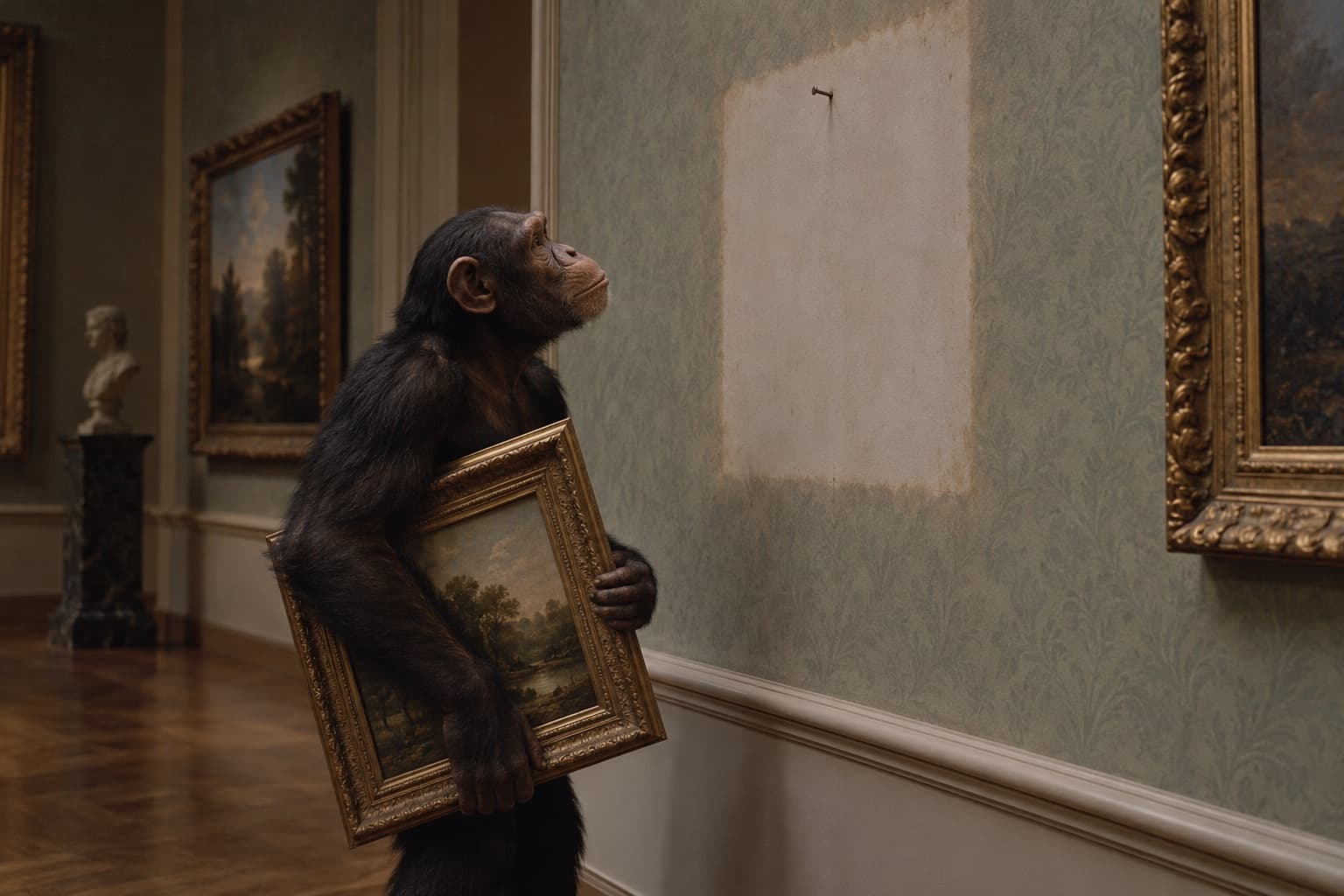
Why can content stop appearing in Google AI Overviews after an update?
Content can stop appearing in Google AI Overviews after an update for several reasons: the page lost ranking in regular search, Google now prefers other sources for the same query, the query no longer triggers an AI Overview at all, or a technical problem keeps the page from being crawled and indexed. Google rolls out core updates several times a year (the March 2026 core update, which Google began rolling out in late March and completed in early April 2026, is a recent example), and after any of them the right move is the same: find out which of these causes applies before rewriting anything. This guide explains what to check, in what order, and which changes are worth making.
Why can content stop appearing in Google AI Overviews after an update?
Because AI Overviews draw on pages that Google already crawls, indexes and considers relevant, any change to those conditions can remove a page from the sources.
A core update changes how Google assesses relevance and quality across the web. It does not target a single page, and Google does not publish a list of what it rewards. So a drop after an update is not, by itself, proof that your page did something wrong: other pages may simply have become better answers. Start by separating four situations:
- The page lost visibility in regular search. If clicks and impressions fell in Search Console for the same queries, the issue is broader than AI Overviews.
- The page still ranks, but other sources are cited. Compare the cited pages with yours: do they answer the question more directly, are they more recent, do they cover something you leave out?
- The AI Overview no longer appears for that query. In this case nobody is cited, and there is nothing to fix on your page.
- A technical problem appeared at the same time. A noindex tag, a blocked resource, a redirect or a template change can coincide with an update and be mistaken for its effect.
Write down the date of the drop and compare it with the dates of the update and of your own site changes. Many “update penalties” turn out to be a deployment that happened the same week.
How do you structure content so ChatGPT and Perplexity cite it as a primary source?
Open each section with a short, self-contained answer that names the subject directly, then support it with details and sources.
AI systems, whether Google AI Overviews, Perplexity or ChatGPT Search, work with passages of text. A passage that answers the question in one or two sentences, without depending on the paragraph before it, is easier to extract and to quote. In practice:
- put the answer right after the heading, not after a long introduction;
- name things explicitly: write “Google Search Console” rather than “a free Google tool”;
- link to the original source for every figure you cite;
- keep one topic per section, so each passage stands on its own.
There is some research behind this approach. The GEO study by Aggarwal and colleagues (Princeton University, IIT Delhi and others, KDD 2024) found that adding citations, quotations and statistics improved source visibility in generative engine responses by up to 40% in their benchmark. It is a useful direction, not a guarantee for any single page.
What tools help measure AI search visibility?
Start with what you already have. Search Console shows clicks and impressions, but counts AI Overviews appearances together with regular web results, so it cannot isolate them. GA4 can show referrals from domains such as chatgpt.com or perplexity.ai. For AI Overviews specifically, the most reliable method is a fixed list of queries checked on a regular schedule, recording which sources are cited. Several rank-tracking tools also report whether an AI Overview appears for a keyword: read their documentation to understand how often they check and from where.
What structured data mistakes should you check for AI search?
Check that your markup is valid, matches the visible content and uses types that Google actually supports, rather than adding schema in the hope of being cited.
Google’s documentation explains the role of markup plainly: “Google Search works hard to understand the content of a page. You can help us by providing explicit clues about the meaning of a page to Google by including structured data on the page.” Structured data helps understanding; it does not force a page into an AI Overview. After an update, the useful checks are:
- Validity. Run key pages through the Rich Results Test and look at the enhancement reports in Search Console.
- Consistency. The markup must describe what is on the page. FAQ markup with questions that are not visible, or dates in the schema that differ from the date shown, are worth fixing.
- Supported types. Google restricted FAQ rich results to a small group of authoritative sites and stopped showing HowTo rich results in 2023. Those types are still valid schema.org vocabulary, but do not expect them to change how you appear.
- Basics. Article, BreadcrumbList and Organization markup help Google understand who publishes the page and where it sits in the site.
Can long-form content lose visibility in AI search results?
Length alone is rarely the problem. What hurts is a long page where the answer is hard to find.
Long articles can rank well: Backlinko’s analysis of 11.8 million Google results (2020) found that the average first-page result had 1,447 words. But a long page that buries its answer under a slow introduction, or mixes several topics in one section, gives AI systems fewer clean passages to quote. Instead of cutting length, review the structure: a direct answer under each heading, short paragraphs, lists or tables where they help, and a clear separation between topics. The table below is a checklist you can use after an update.
| What to check | Where to check it | What it tells you |
|---|---|---|
| Clicks and impressions for the affected queries | Search Console, Performance report | Whether the drop is broader than AI Overviews |
| Whether the query still shows an AI Overview | Manual search, ideally logged out | Whether there is still a citation to win |
| Which sources are cited now | The AI Overview itself | What the cited pages do better or differently |
| Indexing and crawling status | Search Console, URL Inspection | Whether a technical issue coincided with the update |
| Structured data validity | Rich Results Test, enhancement reports | Whether markup errors appeared |
Frequently Asked Questions
How is AI search optimization different from traditional SEO?
Traditional SEO focuses on ranking in a list of results. Optimizing for AI search adds a second goal: being a passage that a generative system can extract and quote. The foundations are the same (crawlable, indexable, useful pages), but direct answers, explicit names and clear sources matter more.
What is the most important factor for appearing in Google AI Overviews?
Google does not publish a ranked list of factors. A page has to be indexed and eligible to appear in search, and it has to answer the question well. In practice, make the subject clear in the first sentence of each section and give a direct, accurate answer.
Does link building still matter for AI search in 2026?
Links still help Google discover and assess pages, and AI Overviews draw on pages that perform in search. Focus on earning editorial links from relevant, trusted sites rather than on volume.
Can small businesses compete with large brands in AI search?
Yes, especially on specific questions where a small business has real expertise and few pages give a clear answer. A precise, well-structured page can be a better source than a generic one from a bigger site.
How often should I update content for AI search?
There is no fixed rule. A practical suggestion is to review important pages every few months, and immediately when facts, prices or products change. Update the content, not just the date.
When content disappears from Google AI Overviews after an update, the worst reaction is to rewrite everything at once. Check first whether the drop affects regular search too, whether the AI Overview still appears, which sources are cited now and whether something changed on your site in the same days. Then fix what the evidence points to: a clearer answer, better sources, valid markup, a technical error. Change one thing at a time and keep a record, so the next update finds you with data instead of guesses.
Why content can drop out of Google AI Overviews after an update, and what to check before rewriting it: search performance, cited sources, indexing and structured data.
Related reading
This article was written and published with ChimpanSEO
Write SEO/AEO articles and publish them to WordPress: it usually takes 1-3 minutes. Try it free, no card required.